
On being a bookworm
And deciding to talk more books on this blog

I read a lot—somewhere between 50 and 70-something books a year1. Barring rare in-between lulls, I’m always in the middle of at least one, more typically three to five books. I’m in three or four book clubs. After moving to a new town this year and getting a new library card, I had to force myself to stop going inside the library until I had returned most of the books I had accumulated on the first few visits. In other words, I’m a bookworm.
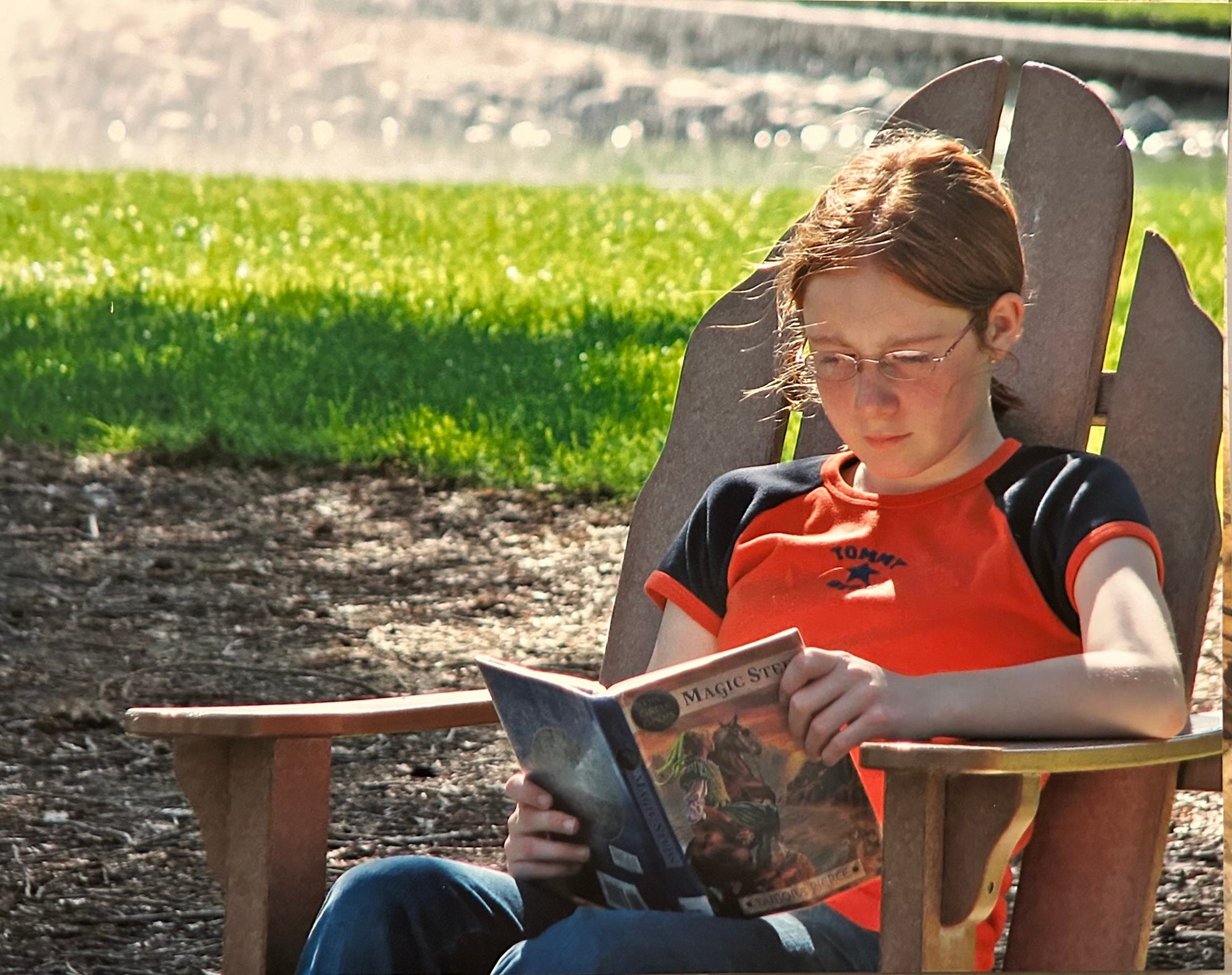
I also enjoy reviewing books—I log my progress on goodreads and try to post a review of every book I read—and talking books, which in my experience is a common phenotype of bookworms. I seek out other reviews and enjoy reading other bloggers’ reading recaps. On my own blog, however, I’ve limited myself to annual recaps. That’s because this is a blog about place and plants and not all my reading is on theme, so I haven’t wanted to muddy the waters of scope more than I already do. And yet so much of my everyday energy goes toward reading and thinking about books.
When I was recovering from surgery last week and lying on the couch 24/7, I read about 5 books, and I also caught up on some of my Substack subscriptions. One of those was The Unseen Review, written by a reader/book critic whose taste has significant overlap with mine. I enjoyed her recaps so much that I started questioning my decision to hold back on books here. I like the idea of a more real-time, chronological log of reading moods and responses. I’m not sure what percentage of my readers also identify as bookworms or book-curious, but I’m guessing it’s high enough that it wouldn’t drive people away in droves if I were to start doing a monthly or bi-monthly reading recap?
That’s a rhetorical question; this post is to announce that I’m going to try it. (Feel free to identify yourself, however!)

All this book-thinking got me musing on the phenomenon of bookworms, and my experience being one. I might prefer the term reader, except that I don’t think it’s strong enough to capture what I mean. My parents are readers (my mom has a Master’s degree in English and teaches college writing), and their house is full of books, and they made sure my childhood was too. But they aren’t bookworms, per se. They aren’t compulsive readers the way I am. None of my siblings are, either. They appreciate books, but they profess to want to read more, which they’re obliged to say because other things tend to take precedence.
For me it’s not a question of feeling like I should or would like to be reading. I just do. It just happens. I just crave it. And I can recognize this condition in others: books are current with them, top of mind, a constant urge.
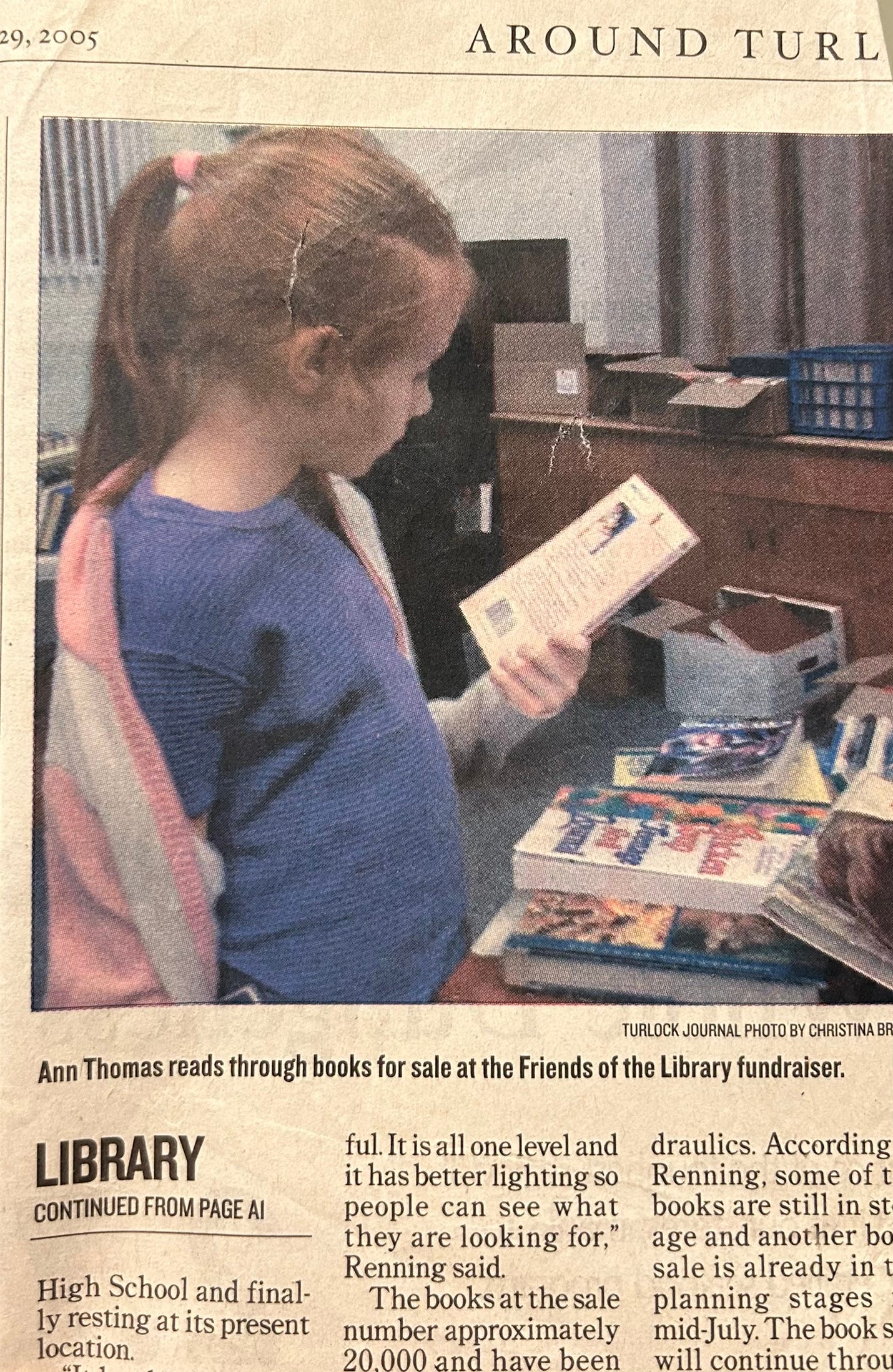
I’m not here to shame anyone or claim that to be a bookworm is a morally superior way of relating to books. It comes with its hazards. Plus, I know what it’s like to go dormant as a bookworm. After having my nose in a book pretty much constantly from age five to age eighteen (I read during recess, I read during pep rallies, I read by the light of the glove compartment while being driven to and from orchestra rehearsals, I read when I was supposed to be doing chores or sleeping, and during the last summer after high school, I made and followed a classics reading schedule for myself), I went to college. Those five years of undergrad were the most intense years of my schooling, even more than grad school. I was studying science, but also took plenty of humanities classes for general ed requirements and electives, so I did read. I even read for fun occasionally. But I switched off the compulsion. Once, when a fellow student told me about a book she was reading (Howl’s Moving Castle) and I said something about not having time to read anymore, she said, “I always have to be reading something, I just don’t think I would be okay otherwise.” And despite my history, I couldn’t relate. I had unhitched that particular wagon from my identity. Or so I thought.
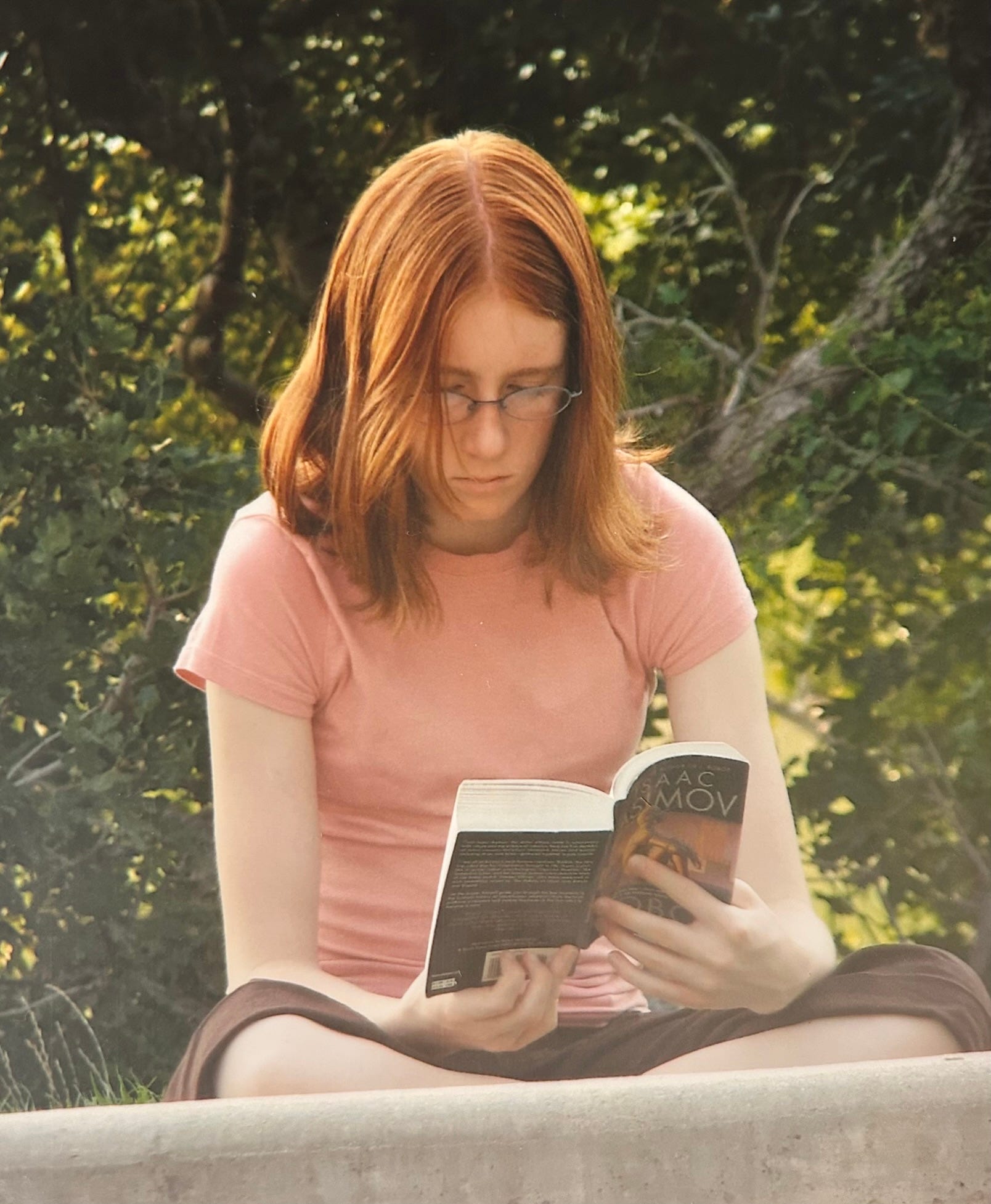
In the UK, where I went to pursue my PhD, there’s no required coursework for PhDs, and no obligations to teach or TA—only research. In my newfound work-life balance, that dormant bookworm part of me roared back to life. (I would say something about bursting out of a chrysalis but the metaphor doesn’t quite stretch that far.) It wasn’t a conscious decision to return to reading a book or more per week—and trawling used book sales, joining book clubs, starting a book tracking spreadsheet—it was, I posit, my natural state.
I actually felt somewhat guilty about it. Because I was so used to school occupying most of my waking life, not to mention the general messaging in academia about how passion for your subject and desire to have a career should drive you to the grindstone, the way novels2 flowed into this open space like a law of nature seemed to me like a sign that I wasn’t serious enough. It took several years (and a bit of a mid-PhD identity crisis) to accept that this was simply how I wanted to live. As I’ve coalesced into reading-based friend groups, followed readers online who feel unapologetically the same way, and seen myself increasingly as a writer, the habit of reading has further solidified into a way of life.
I’ve been waiting for my demanding new job to push me into a new period of dormancy, but it hasn’t happened (far from it). Perhaps it still will, or perhaps if I had a marriage and kids on top of my work, or some other fill-in-the-blank demand on time/energy/headspace, reading would leave the equation.3 However, now that I’ve recognized and reinforced the chemistry of this compulsion so thoroughly, I’m not so sure.
This is partly thanks to a secret weapon: audiobooks. They work gratifyingly well for me, though I know they don’t for everyone. If it weren’t for audiobooks, as much as I appreciate sitting down with a printed book, I might be harder pressed to prioritize reading the way I claim is natural to me. I didn’t really embrace audiobooks until grad school, and they probably assisted my reading renaissance. At one point I was listening to a book a day while pipetting DNA samples4—and there are always dishes to be done, laundry to be folded, commutes, queues. Audiobooks went straight to my veins and continue to do so.5
Let’s talk more about the chemistry. Or in other words, why am I like this? Because it is chemical, I think (and/or neurological; Idk, I’m not that kind of doctor). Reading delivers big, rich, caloric dollar-sign rewards to my brain. Not only reading, but thinking about reading. Perusing book lists, reading/writing reviews, talking about books, browsing bookstores and libraries and other peoples’ bookshelves, making lists about what to read next. There’s a reading-book-collecting-industrial complex inside my head. I’ll say more about that collector’s impulse, which may exist independently in my case, but I think it starts with the reading itself; the rest is all about anticipation of reward.
The reward is multi-faceted: a big dose of novelty in occupying other bodies and settings and experiences; the immersive pleasure of narrative and imagination in as many dimensions as my mind can fathom; the intricate, near-infinite puzzle of language, prose style, sound, structure, all the effects invented by words to do things to my pattern-matching mind; the fizz of humor, surprise, subtext, and subversion; information to add to my ever-growing constellation of context about the world and its nooks and crannies; ideas to chew on and challenge. I seek a varied diet of enrichment, like a parrot. I’m greedy for it.
It’s not that I see books as the only or highest form of entertainment, expression, storytelling, and idea-sharing worth pursuing. I appreciate film, TV, music, theatre, visual art, podcasts, journalism, blogs, Wikipedia, video games, travel, museums, memes, campfire stories etc—but I’m not the equivalent of a bookworm for any of them (except maybe music6). Books, especially fiction and narrative nonfiction, fill so many of the waiting spaces in my brain at once. Maybe books carved them out in the first place.
Obviously, not all books are created equal, nor are individual tastes. Taste is a subject I’ve worked up many thought-knots about, black box that it is. All I know is that while the reward-seeking complex of my reading brain is voracious and omnivorous, it’s also picky. It gets impatient when a book is doing silly things like spoon-feeding emotions or whacking me over the head with a message or otherwise wasting words, or when a prose style or set of characters simply aren’t striking the right resonance for this idiosyncratically calibrated apparatus. When a book hits the spot, on the other hand, there are choruses of angels. Observing and tinkering with this apparatus and its moods is part of the fun.
So it makes sense that snuffling out the right books like truffles, sifting through and piling up lists of possible riches, would also be appealing. There’s surely dopamine involved. There’s also that collecting impulse, the one I inherited from my collector-of-many-things mom, and which I also apply to a range of things—birding, magnets, little ceramic bowls, spreadsheets, tiny shells and rocks, photos of cool houses I see on my architecture walks, and books. I actually am not (relatively speaking) an inveterate book collector in the sense of ownership; there are a number of books I definitely want to own, some to reread and some that I consider sentimental or artistic objects, but I let go of other books easily once read or given up on.7 With books, my collecting impulse is less physical and more metaphysical. I want to have read them—to have assimilated them into my palate, my internal world-library. I enjoy the reading itself too much to fear that I’m being driven only by list-checking, but I can’t deny a certain itch to finish a book, add it to my collection, and move on to the next novelty.8 I don’t push myself to reach a certain number of books each year, but I push onward nonetheless, via appetite both for the reading and for the books.
Analytical as I am, assessing and articulating the fit of a particular book with my particular apparatus is an important step in collecting it, so writing reviews and giving star ratings on goodreads is a natural impulse. So is conversation and comparing notes with bookish friends, triangulating my own responses with others’. As a result, my sense of community around books has steadily grown. Finding people with these same impulses, for whom books are a conduit between themselves and the world, and whose external and internal rhythms are also shaped by reading, is a likely path to friendship. Not only a shared hobby (with varying levels of shared taste), but a shared way of being.
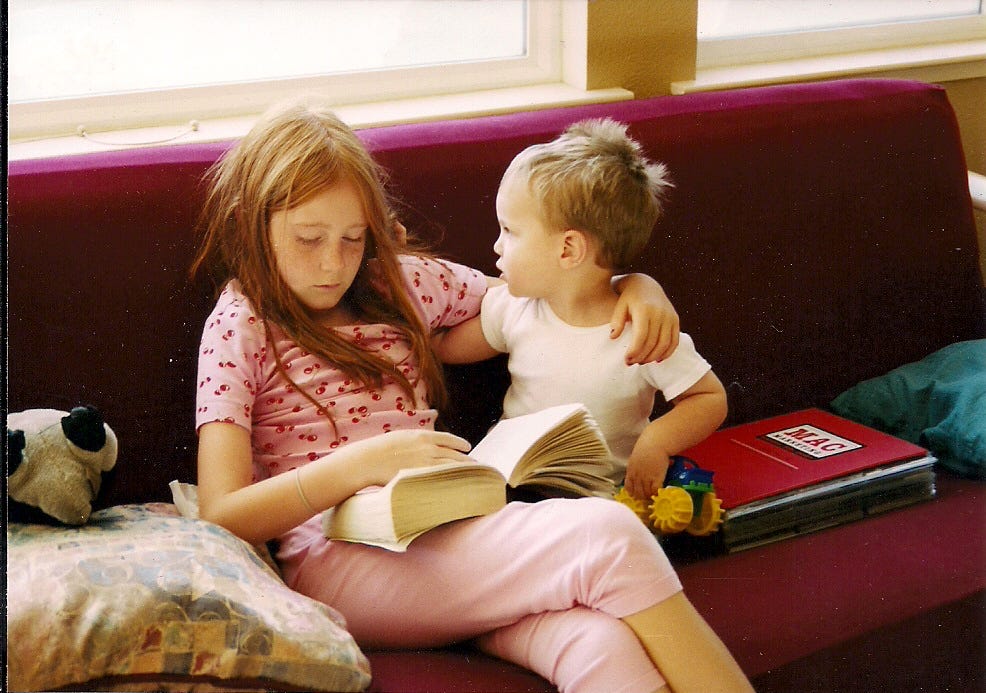
So, in sum, what makes me a bookworm? Intense curiosity, a yen for narrative, a fascination with words and their patterns, a collector’s impulse, a hungry imagination, a highly conducive childhood exposure to books, to name a few ingredients, all pushing me toward a habit-forming relationship with reading. How universal are these factors in making bookworms out of potential readers? I could be wrong, but I have the sense that there’s something of a step change in intensity between those who read occasionally or rarely and those for whom it’s a habit. If that threshold exists, does it simply take the right exposure to the right books and the right conditions to spend enough time reaping the rewards of reading to be pushed over it, and for the habit to take hold? Or are bookworm tendencies innate to some extent? Knowing humans, of course, there are a million different answers.
I’d like to think that anyone can become a reader in some form, but I don’t expect bookworm intensity to make sense for everyone. And yet I can think of plenty of people who were readers or bookworms in childhood and fell out of practice with the onset of complex, distracted adult life, and who haven’t yet found a way back in; I also know others who have—myself included, really. Reading is so embedded in my identity now that it’s hard to see my hiatus as anything more than a blip.
Tell me, what is your relationship with reading? Do you consider yourself a bookworm? Have you thought much about what has shaped that relationship?
As for sharing more of my reading life on this blog, I’ll start sending out more frequent recaps on what I’ve been reading, the highs and lows, and see how it goes. (I’ve read 33 books since January 1, so I’ll have to decide how many “catch-up” posts to include.) In deference to the purported scope of this newsletter, I’ll try giving special attention to the elements of place and nature in what I read, since it tends to crop up, even in books that aren’t overtly about those subjects. But mostly, I just want to talk books, and hear from other readers who enjoy talking books. Do join in!
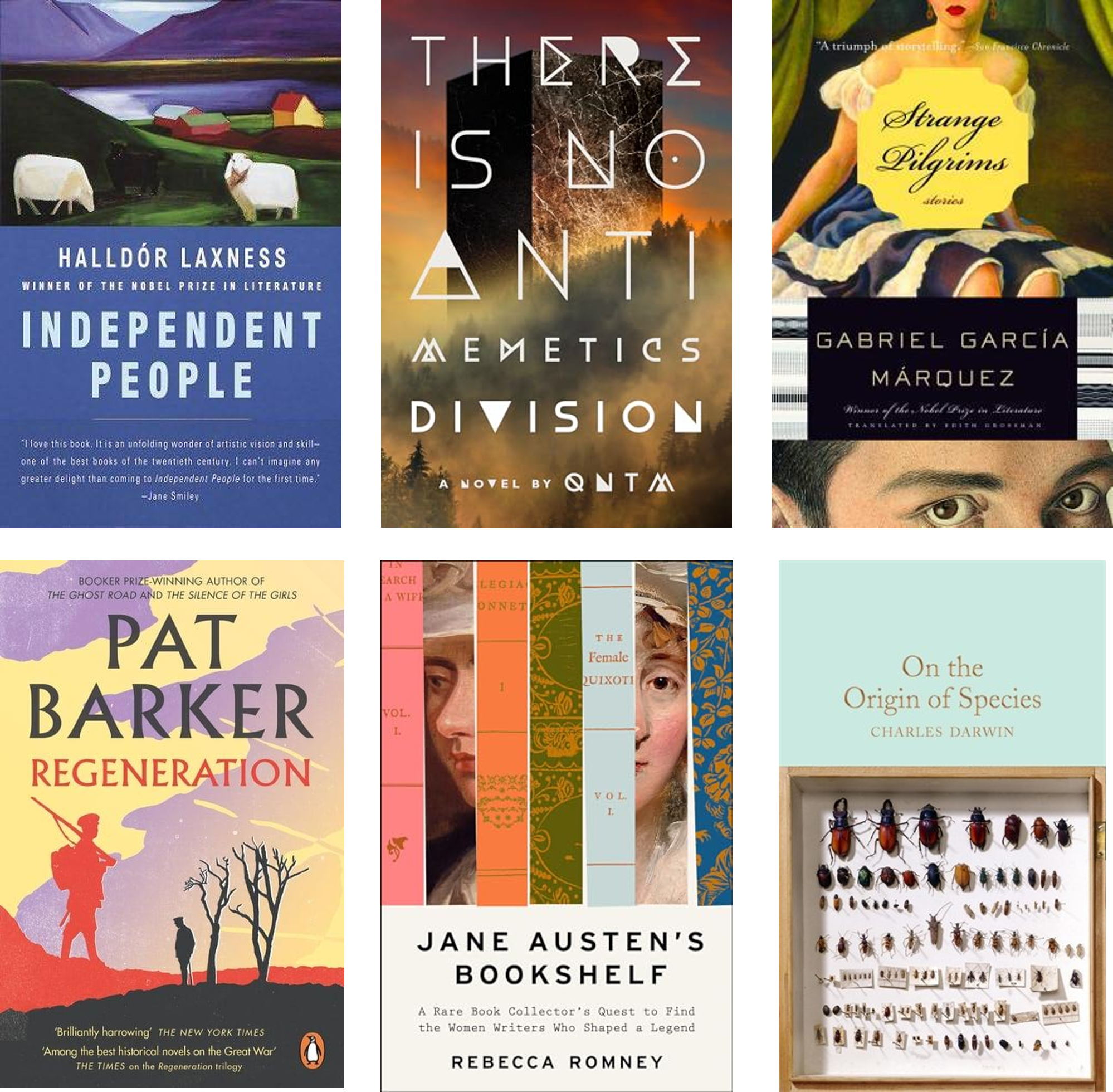

I’m not claiming this annual book count is exceptional, I have friends who read in the hundreds.
and other genres, but notably not science papers or textbooks or seminal works…
My reading time has definitely come at the expense of Substack writing lately, I will say.
During the week of July 19-26, 2019, for example, I logged Crime and Punishment, Braving the Wilderness by Brene Brown, Heart of Darkness by Joseph Conrad, A Man Called Ove by Fredrik Backman, Down and Out in Paris and London by George Orwell, and Unbroken by Laura Hillebrand. Although I actually think the last one was a skimmed ebook.
I could write a whole other essay about the discourse around whether audiobooks count as reading. I’ll spare you and just say, based on personal experience and scientific evidence, it counts.
And also just being alive, physically experiencing the actual world, my own relationships etc—I’m not a total escapist. But that’s beyond the scope of this essay.
Though this might change as I settle in more permanent and larger spaces.
This in spite of Simon Haisell’s tutelage on the art of the slow read…
I loved this and say yes, go for it if that is what you want to write about! Nobody will take you to task for not sticking exactly, post after post, to your original niche and format. It can be good to change and after all, this is your space!
I checked "I'm a bookworm" because "I'm book-curious" seemed to fit less, but the better answer would be I used to be a bookworm, but I'm no longer one.
Like you, I was brought up by educators in a house filled with books. I was reading by the age of four, reading novels in late grade school, and I overall read voraciously all through my schooling, including university because I was an English major and French minor. So I spent my undergraduate years lovingly reading more and more books.
But as time is finite, and as I am someone who needs to sleep, a lot of other activities cut into my reading time. I never stopped reading, but it became less of a priority. So I think I have fallen into the category of "a reader" rather than "a bookworm", but unlike some, I'm not always saying "I need to read more". I'm still always reading something, but don't get as much reading done. And I'm fine with that.
Oh, and -- if you're interested in meeting other real-life readers in your area, I recommend Silent Book Club. Unlike most book clubs, you bring your own book and read whatever you want, then talk about it briefly with the other folks gathered there. I checked for BYU on the Silent Book Club site and it looks like the Springville Public LIbrary hosts one.